Corporate Taxes in Moldova (2026 Guide for Foreign Investors)
Introduction
Moldova has become one of the most attractive low-tax jurisdictions in Europe for entrepreneurs, IT companies, consultants, and international investors.
With a 12% corporate income tax, the unique Moldova IT Park 7% unified tax regime, and relatively simple compliance requirements, the country is increasingly chosen as a base for cross-border operations.
This guide explains everything foreign investors need to know about corporate taxation in Moldova in 2026:
• Corporate income tax
• IT Park taxation
• Dividend taxation
• Withholding taxes
• VAT rules
• Salary and social contributions
• Double taxation treaties
• Reporting obligations
• Tax optimization structure (legal and compliant)

1. Corporate Income Tax in Moldova
Standard Corporate Tax Rate
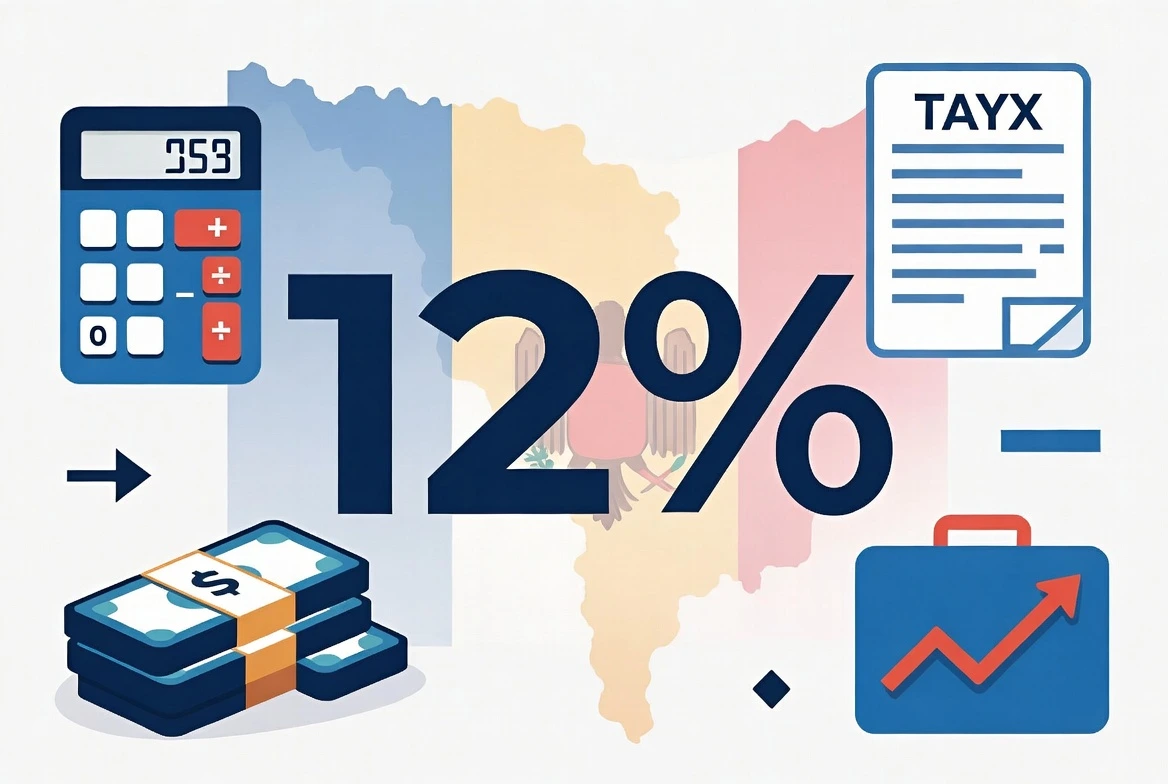
The standard corporate income tax (CIT) rate in Moldova is:
12% on taxable profit
This applies to most companies, including:
• SRL (Limited Liability Company)
• Joint-stock companies
• Representative offices generating local taxable income
Taxable profit = Revenue – deductible expenses.
What Expenses Are Deductible?
Generally deductible:
• Salaries and employment costs
• Office rent
• Utilities
• Marketing and advertising
• Professional services
• Accounting and legal services
• Depreciation of assets
• Business travel
Non-deductible expenses include:
• Fines and penalties
• Certain excessive entertainment expenses
• Undocumented costs
Proper bookkeeping is essential. Moldova follows national accounting standards aligned with international principles.
2. Moldova IT Park Tax Regime (7% Unified Tax)
For IT and digital businesses, Moldova offers one of the most competitive regimes in Europe.
Under the IT Park regime:
7% unified tax on turnover (not profit)
This replaces:
• Corporate income tax
• Payroll taxes
• Social contributions (within the formula)
• Local taxes
It is effectively a simplified consolidated tax.
Who can apply?
• Software development companies
• SaaS providers
• IT consulting
• Gaming development
• Certain digital services
This regime is especially attractive for companies with high margins and low physical infrastructure costs.
3. Dividend Taxation in Moldova
When distributing profit to shareholders:
Dividend Withholding Tax
• 6% withholding tax on dividends paid to residents and non-residents
This is relatively low compared to many EU countries.
If Moldova has a Double Tax Treaty (DTT) with the shareholder’s country, reduced rates may apply.
Example
Company profit: €100,000
Corporate tax (12%): €12,000
Net profit: €88,000
Dividend withholding (6%): €5,280
Effective total taxation: significantly competitive by European standards.
4. Withholding Taxes on Payments Abroad
When paying foreign companies or individuals, Moldova may apply withholding tax.
Standard rates vary depending on:
• Type of payment
• Double taxation treaty
• Nature of services
Payments potentially subject to withholding:
• Royalties
• Interest
• Consulting services
• Management fees
Many treaty jurisdictions benefit from reduced rates.
Moldova currently has 40+ double taxation agreements.
5. VAT in Moldova
Standard VAT Rate
20% VAT
Reduced rates:
• 8% for certain agricultural and pharmaceutical goods
• 0% for exports
VAT Registration Threshold
VAT registration is mandatory if turnover exceeds a statutory threshold within 12 months.
Foreign companies may also need VAT registration depending on business model.
IT Park companies may still be VAT payers for certain operations.
6. Payroll Taxes and Social Contributions
If your company hires employees outside IT Park regime:
Employer contributions include:
• Social security contributions
• Health insurance contributions
Combined burden is higher than corporate tax but remains moderate by EU standards.
IT Park companies benefit from simplified payroll taxation inside the 7% regime.
7. Accounting and Reporting Obligations
All Moldovan companies must:
• Maintain accounting records
• Submit annual financial statements
• File corporate tax returns
• File VAT returns (if registered)
• Submit payroll reports (if employing staff)
Reporting frequency depends on:
• Tax regime
• Company size
• Activity type
Even dormant companies have compliance obligations.
8. Double Taxation Treaties (DTT)
Moldova has treaties with many countries including:
• Germany
• Italy
• France
• Romania
• Poland
• United Kingdom
• Turkey
• Austria
• Netherlands
• Switzerland
These treaties help:
• Avoid double taxation
• Reduce withholding taxes
• Improve international structuring
Proper treaty application requires documentation (residency certificates etc.).
9. Tax Optimization — What Is Legal and What Is Risky?
Legal tax optimization strategies include:
• Choosing IT Park regime when eligible
• Structuring dividends efficiently
• Using double taxation treaties correctly
• Proper expense planning
• International holding structures (case-specific)
Risky practices include:
• Artificial profit shifting
• Undocumented service agreements
• Fake substance structures
• Nominee arrangements without legal basis
Moldovan tax authorities increasingly cooperate internationally. Compliance and transparency are essential.
10. Comparing Moldova’s Tax System to the EU
Why investors choose Moldova:
• 12% corporate tax (lower than most EU states)
• 7% IT Park unified tax
• 6% dividend tax
• Relatively simple reporting
• No complex CFC regime for local companies
• Competitive operational costs
For many service-based businesses, Moldova offers one of the best effective tax burdens in the region.
11. When Moldova Is NOT the Right Choice
Moldova may not be ideal if:
• You require access to EU VAT area without structuring
• Your clients demand EU-incorporated entity
• You operate in heavily regulated sectors
• You need advanced banking infrastructure in Tier-1 EU banks
In those cases, comparative structuring analysis is recommended.
12. Step-by-Step: From Registration to Tax Compliance
• Choose legal form (usually SRL)
• Register company
• Open bank account
• Select tax regime (standard vs IT Park)
• Register for VAT if required
• Set up accounting
• Begin reporting cycle
Related guides:
Complete Guide to Company Registration in Moldova
Opening a Bank Account in Moldova for Foreign Companies
Company Registration Costs in Moldova
13. Frequently Asked Questions (FAQ)
Question: Is Moldova a low-tax country?
Answer: Yes. With 12% corporate tax and 6% dividend tax, it is among the most competitive in Europe.
Question: Is IT Park really 7% total tax?
Answer:It is 7% unified tax on turnover, replacing several taxes. Suitability depends on business model.
Question: Can foreigners own 100% of a Moldovan company?
Answer: Yes. No local partner is required.
Question: Is there capital gains tax?
Answer: Capital gains are generally treated as taxable profit under corporate tax rules.
Question: Are there anti-avoidance rules?
Answer: Yes. Moldova follows international transparency standards and exchange of information.
Conclusion
Moldova offers a transparent and competitive corporate tax system that is especially attractive for:
• IT companies
• Digital businesses
• Consultants
• International service providers
• Entrepreneurs seeking efficient tax structures in Europe
However, choosing the correct tax regime requires case-by-case analysis depending on:
• Shareholder structure
• Residency of founders
• Type of activity
• Revenue model
• International exposure
Explore Company Registration in Moldova
If you need professional assistance, visit our company formation services in Moldova.
This guide was prepared by Viorel Furtuna, licensed Moldovan lawyer specializing in corporate law, company formation, and international business relocation.
ASK A QUESTION or ORDER A SERVICE
click the icon to call us



Written by : Viorel Furtuna