
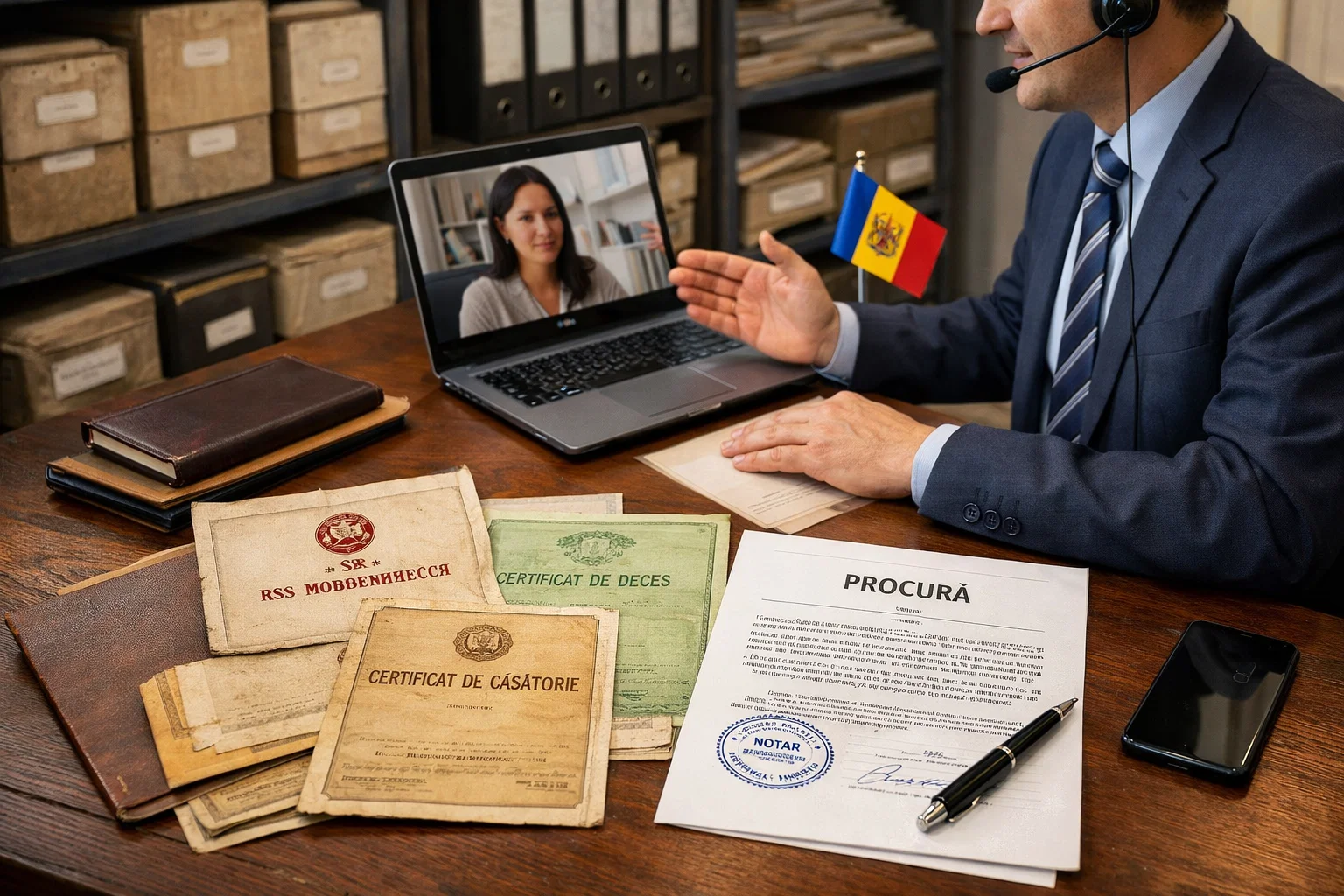
Restoration of Vital Records in Moldova – Archives, Civil Registry, and Court Procedures
In which cases is it necessary to restore documents?
Restoration of vital records in Moldova can be critically important in the following situations:
- For obtaining Moldovan citizenship, for example when proof of birth or marriage is required;
- For obtaining Romanian citizenship — restored documents confirm family ties to ancestors who previously held citizenship;
- For obtaining Israeli citizenship — especially relevant for repatriation when birth, marriage, or family relationship documents are needed;
- For immigration and residence permit procedures in other countries;
- For inheritance matters, official real estate transactions, or legal procedures abroad.
When Restoration of Vital Records Applies
Restoration of civil registry records is the procedure of reinstating an official birth, marriage, divorce, or death record when:
- The record was originally registered but was not preserved due to full or partial loss of documents;
- The record was registered abroad, but it is impossible to obtain the certificate or extract.
Which Vital Records Can Be Restored
Vital records that contain official identity information, confirm a person’s civil status, or reflect changes to personal data can be restored. These include:
- Birth certificates
- Marriage certificates
- Divorce certificates
- Death certificates
- Certificates of change of name or surname
Who Can Request Restoration of a Vital Record
The following persons may request restoration:
- The person to whom the original record pertains;
- Family members or relatives of a deceased person;
- Legal representatives of minors or individuals under guardianship or custody;
- A representative acting under a notarized power of attorney granting appropriate authority.
Procedure for Restoring a Vital Record
Restoration in Administrative Procedure
A request for restoration is filed with the local civil registry office along with documents proving that the lost record previously existed.
After reviewing the application, the registry office opens a file and makes a decision to restore the relevant record. If the registry office determines that the submitted documents are insufficient for restoration, it issues a conclusion confirming the inability to restore the record, enabling the applicant to proceed to the next stage — filing a court petition to establish the fact of registration.
Restoration Through Court
The basis for a court petition is the refusal of the civil registry office to issue a duplicate certificate due to the absence of an archival record.
In essence, this procedure aims to establish, based on collected evidence, the fact of registration of birth, marriage, death, or other legally significant events in the absence of an original registry record.
After the court decision becomes final (usually after 30 days if not appealed), it is forwarded to the civil registry office, which then restores the record and issues the certificate.
Why It Is Better to Work with Professionals
The procedure for restoring vital records can be complex, particularly when preparing the evidentiary basis for both administrative and judicial procedures. Working with professionals offers several advantages:
- The entire process can be completed remotely — there is no need to personally visit the registry office or attend court hearings;
- Time savings and minimization of errors when collecting documents and working with archives;
- Legal support at every stage of the process;
- Fast and lawful restoration of records even in complex cases.
If you need to restore documents, you can engage our specialists for remote assistance via power of attorney.
Timeframes and Costs
- Searching and obtaining documentary evidence: 2–4 weeks
- Administrative review: up to 20 working days
- Court proceedings: 1–2 months, depending on the court’s caseload
The cost depends on the procedure, the number of documents required as supporting evidence, the complexity of obtaining them, urgency, and the overall volume of requests to relevant authorities. Contact us for an exact quote.
Additional Services
After restoring the documents, you can also order:
- Apostille services
- Notarization
- Document translations
Conclusion
Restoring vital records is a complex but solvable task. Consult with specialists so that the process proceeds quickly, legally, and without your personal presence.
Contact us today and begin restoring your documents remotely.
ASK A QUESTION or ORDER A SERVICE
click the icon to call us


Written by : Law Office Viorel Furtuna
LATEST PUBLICATIONS

April 12, 2026

April 12, 2026